As most people who eat Paleo know, everyone does it differently. What works for one persons body, does not work for the other. I can't handle too much cheese or dairy but Brandon is okay with it. We consider Brandon- Primal and I consider myself Paleo. Paleo and Primal also look different to each person.
- Swiss Paleo (Primal- consume dairy)
- Slow Carbers (consume beans)
- Athletes (consume starches)
So how do you know which one is right for you? Troubleshooting!!!!
I listened to the Paleo Summit last week and I tuned into a session by Dr. Allison Siebecker
She talked about IBS and even people who eat right, still struggle with IBS. If you want to know if you have IBS, get straight to the answer and get tested. Your doctors might only give you the basic Colonoscopy. But research your issues and ask for some of these specific tests.
- Breath test- Small intestine bacterial overgrowth (SIBO) lactose/ fructose intolerance
- Endoscopy- will test for Reflux and GERD or Celiac disease
- Heidelberg test- tests the amount of stomach acid when a meal is consumed
- Gluten sensitivity testing
- Cross Re-activity testing, colonoscopy- helps rule out Chron's and Cancers
- Stool testing- tests for parasites and yeast overgrowth in the colon.
Okay now that we know how to get tested- let's learn a little about our body and how it functions:
Small Intestine: 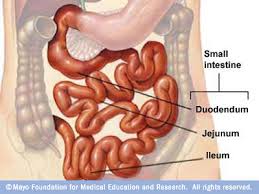
SIBO- Small Intestine Bacterial Overgrowth-84% of people with
IBS have SIBO. It damages the small intestine, bacteria destroy
disaccharide(lactose, sucrose, maltose) enzymes lining the small intestine and this creates inability to properly
process disaccharides.
Properly Process Disaccharides- “when we don’t have these
disaccharide enzymes, the carbs we eat can’t finish being digested. The
bacteria EAT those improperly digested disaccharides. They are food for them!
They eat the sugars and then they make GAS!”
Large Intestine: 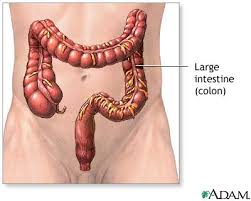
Gas causes IBS symptoms: bloating, constipation, diarrhea,
pain, visceral hypersensitivity.
Constipation: Decrease in fiber because of lack of grains, slow
down the transition, soluble fiber feeds bacteria, insoluble fiber adds bulk to
stool. You need to increase in fiber with veggies, nuts and seeds
What do we do to avoid these symptoms in our intestines?
Low Carb diets:
GAPS diet, Low FODMAP diet, Paleo, Primal, Slow Carb, You need to troubleshoot your digestive track and see what the main cause of your symptoms is.
Trouble shoot constipation:
Issues: Can't got to the bathroom, Cramps, Bloating, Gas
Troubleshoot: Try taking Magnesium- 1000mg before bed. The Magnesium will draw water into colon via osmosis.
*Adjust dosage appropriately
Fat Digestion:
Symptoms: nausea, feeling overly full
Troubleshoot: Increase fats slowly
to avoid symptoms
Slow Carb Troubleshooting:
Issues: Beans and sweet potatoes contain starch, starch breaks down
maltrose and isomaltrose (disaccharides), bacteria consumes disaccharides,
beans contain prebiotics that feed bacteria.
Troubleshoot: Fix beans by soaking overnight prior to cooking, beans and
tubers are high in soluble fiber(bacteria food)
Specific Carb Diet Troubleshooting:
Avoid if IBS- Potato, sweet potato, yap, parsnip, turnip. These tend to bind you up!
Try: Rutabaga, Beets, Carrots, Celery, Squash. These tend to be more tolerable!
Troubleshooting veggies:
Veggies can be troublesome for those with IBS.
Troubleshoot: Peel, de-seed, and
cook them. Don’t eat raw veggies if you have digestive problems.
Identify
tolerable veggies by paying attention to your body after eating them, if you notice symptoms.
Trouble shooting Fruits:
Fruits contain high levels of sugar alcohols. Sugar alcohol tolerance
depends on the person (figure out what works for you- I personally get very gassy when I eat too much fruit!)
Troubleshoot: Peel, de-seed and stew
fruits. Eat in moderation (especially if you are trying to lose weight). Pay attention to your body and note how you feel after the different types of fruit.
Troubleshooting nuts and seeds-
Veggies, Fruits and nuts all contain prebiotics (non digestible food ingredients)
Troubleshoot: Eat nuts and seeds raw, dry roasted, soaked over night, remove skin, cook with Blanched Almond flour, Coconut butter/ oil
Avoid- nuts soaked in Vegetable oil, Canola oil, and Peanut oil.
IBS friends-Coconut can be troublesome, use in moderation and note how your body feels after eating.
In general Eat all things in moderation, try about 4 oz of seeds/nuts a day.
Okay that is enough for you to get started. In part two, I will share Dairy, Sweeteners and an overall idea of our diets. I hope this is as helpful to you as it was to me! Happy Troubleshooting.

